Aircraft › Boeing › Boeing B-29 Superfortress › Boeing B-29 Superfortress
Boeing B-29 Superfortress
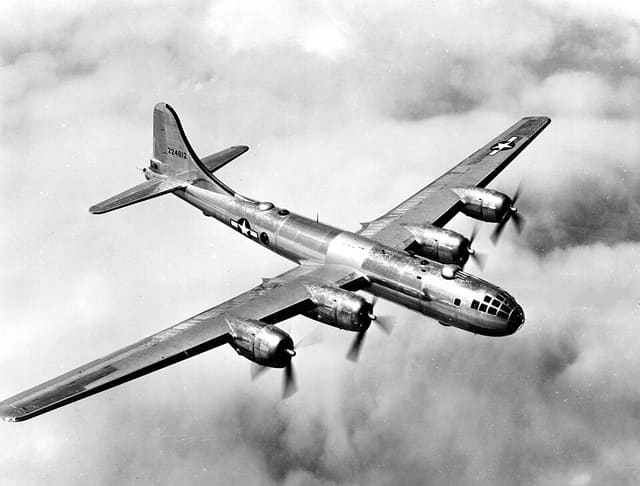
The B-29 was a four-engine heavy bomber, 99 ft (30.18 m) long with a 141 ft 3 in (43.05 m) wingspan and a height of 27 ft 9 in (8.46 m), as the National Museum of the US Air Force lists them. It gives four Wright R-3350 engines of 2,200 hp each, a maximum weight of 133,500 pounds, a top speed of 357 mph, a cruising speed of 220 mph, a range of 3,700 miles and a ceiling of 33,600 ft. Pima Air and Space Museum lists 3,250 miles and 31,850 ft. The photo shows B-29-50-BW 42-24812, Miss Su Su, delivered to the 504th Bomb Group in November 1944.
- Cruise speed
- 191 knots (350 km/h)
- Engines
- Four piston engines on the wings: Wright R-3350
- Max takeoff weight
- 134,000 lb (60,555 kg)
Photos from members
No member photos of this aircraft yet. Be the first to add one.
Specifications
| Length | 99 ft 0 in (30.18 m) |
|---|---|
| Wingspan | 141 ft 3 in (43.05 m) |
| Height | 27 ft 9 in (8.46 m) |
| Ceiling | 33,600 ft (10,200 m) |
| First flight | September 21, 1942 |
| Status | Retired in 1960 |
| Type codes | ICAO B29 |
Who flew it
- US Army Air Forces
- US Air Force
Service branches, from the services' own fact sheets. No flight data is shown for military aircraft.
History
Bockscar, one of 15 modified Silverplate B-29s of the 509th Composite Group, dropped the Fat Man bomb on Nagasaki on August 9, 1945, three days after Hiroshima, and the Enola Gay, built by Martin at Omaha, dropped the first. Most B-29s carried eight .50-caliber machine guns in remote-controlled turrets, two more machine guns and a 20 mm cannon in the tail, and up to 20,000 pounds of bombs. The B-29 returned to combat when the Korean War began in June 1950. Pima Air and Space Museum says many continued in Air Force service into the early 1950s as bombers, reconnaissance aircraft and tankers, and Wikipedia dates the type's retirement to June 21, 1960. Pima Air and Space Museum says more than 3,000 were built, and other sources count 3,970.
Last operators
- US Air Force