Aircraft › Aerospatiale/BAC › Aerospatiale/BAC Concorde › Aerospatiale/BAC Concorde
Aerospatiale/BAC Concorde
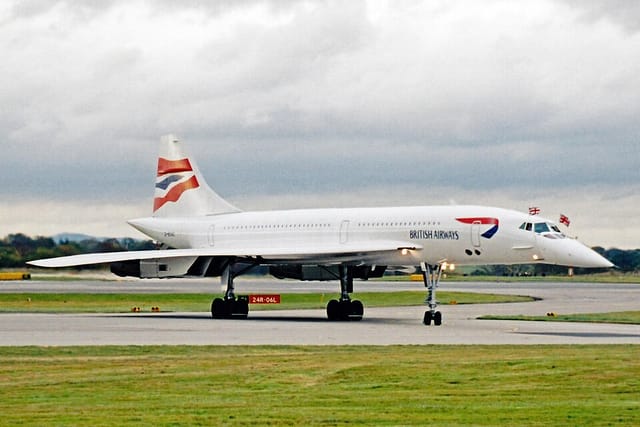
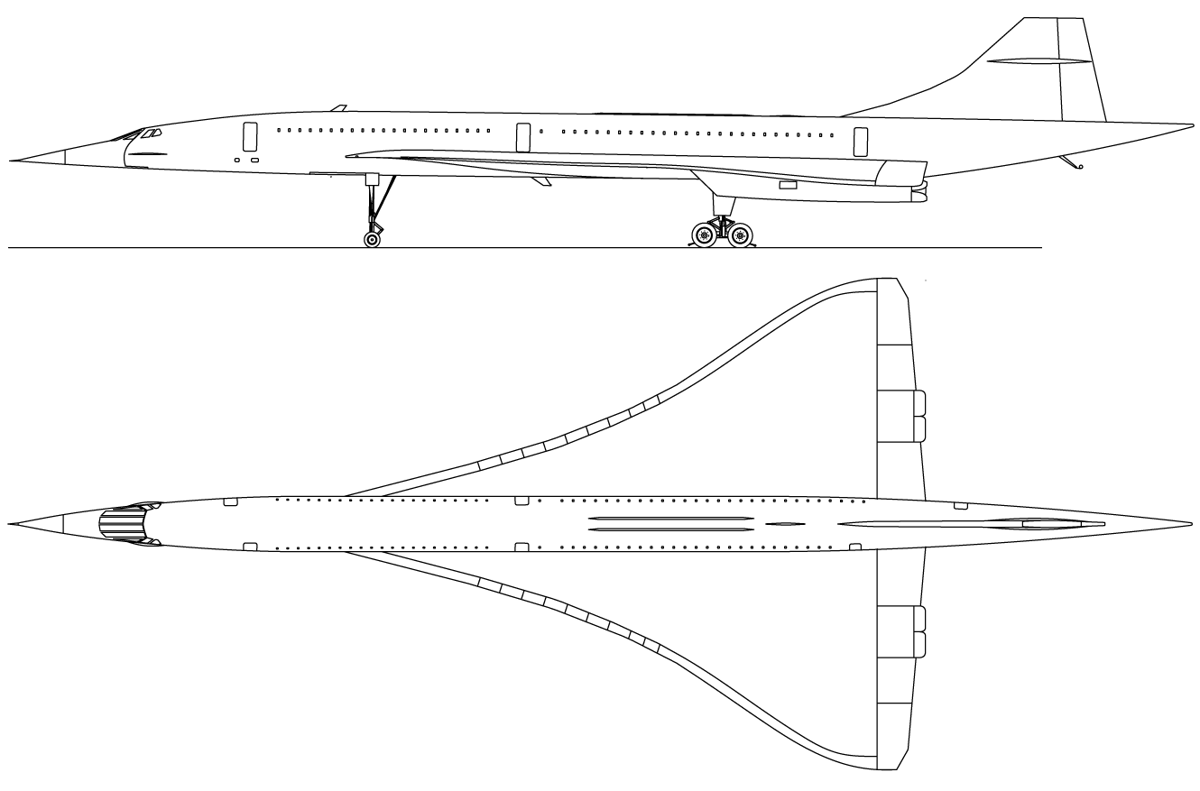
The production Concorde is 61.66 m (202 ft 3 in) long with a wingspan of 25.56 m (83 ft 10 in), a slender delta wing, and four Rolls-Royce/SNECMA Olympus 593 Mk 602 engines of about 38,050 pounds of thrust each. The Smithsonian lists a gross weight of 181,435 kg (400,000 lb) and up to 100 passengers in tight four-across rows. It cruised at twice the speed of sound, at about 55,000 to 60,000 feet. The Museum of Flight quotes a range of 4,090 miles for G-BOAG, the aircraft it holds.
- Cruise speed
- Mach 2.00
- Seats
- 100 in one class
- Engines
- Four Rolls-Royce/SNECMA Olympus 593 Mk 602 turbojets under the wings
- Max takeoff weight
- 400,000 lb (181,435 kg)
Photos from members
No member photos of this aircraft yet. Be the first to add one.
Specifications
| Length | 202 ft 4 in (61.66 m) |
|---|---|
| Wingspan | 83 ft 10 in (25.56 m) |
| Height | 37 ft 1 in (11.30 m) |
| Ceiling | 60,000 ft (18,300 m) |
| First flight | March 2, 1969 |
| Entry into service | January 1976 |
| Number built | 20 built |
| Status | Retired in 2003 |
History
Concorde entered service in January 1976, when Air France and British Airways jointly inaugurated it, and transatlantic flights began by November 1976. The two airlines bought their aircraft from their governments at virtually no cost. An Air France Concorde crashed near Paris in 2000, and falling demand followed. Air France announced that its Concorde service would end on May 31, 2003, and its first production aircraft, F-BVFA, flew to Washington Dulles on June 12, 2003. British Airways flew its last commercial Concorde flight on October 24, 2003, from New York to London. The very last Concorde flight of any kind came on November 26, 2003.
Last operators
- British Airways
- Air France